Before you fall in love with any particular hull, one decision outranks all others: are you buying a compact submersible that rides aboard your yacht as a tender, or a fully submersible superyacht that is itself the vessel? For most owners already committed to a mothership, the answer is the former, and the real comparison comes down to three trade-offs — how deep you want to go, how many guests you want to bring, and how much weight your crane and deck can actually carry. I walked through the available specifications from Triton and U-Boat Worx with those three questions in mind, and what emerges is a market cleanly split between refined recreational craft and serious expedition machines.
Introduction: Navigating the Depths of Luxury Submersibles
Personal submarines have quietly become one of the most compelling accessories in yachting. As industry writer Rebecca Taylor notes in her 2024 buying guide for YATCO, these craft are designed for recreational use, letting owners enjoy close-up views of underwater wonders from a pressurized cabin — whether the interest is marine biology, underwater photography, or simply the adventure of a lifetime. Models accommodate anywhere from two passengers upward, so the experience can be shared.
What makes the category genuinely interesting is how sharply the options diverge. A shallow-diving lounge can be a champagne-and-coral affair, gentle and guest-friendly. A deep-rated expedition vessel is closer to a scientific platform, built for long descents into cold darkness. Neither is "better"; they simply serve different owners. The guide I have assembled below sorts the leading options by mission, then weighs the practical variables that decide whether a given submersible can actually live aboard your yacht. One caution before we dive: this comparison rests on manufacturer specifications and industry reporting, not hands-on testing, and pricing in this market is bespoke, quoted only on request.
Yacht-Borne Submersibles vs. Submersible Superyachts: A Crucial Distinction
Here is where many first-time researchers go astray. The phrase "private submersible" covers two entirely different products, and confusing them wastes months of research. As a guide published by TheArsenale puts it plainly: "Compact submersibles are carried aboard a mother yacht, whereas submersible superyachts are themselves the vessel." The first category — the focus of this article — is a sophisticated tender. The second is a primary vessel that happens to dive.
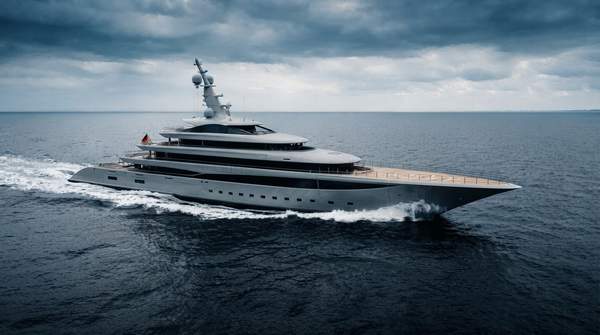
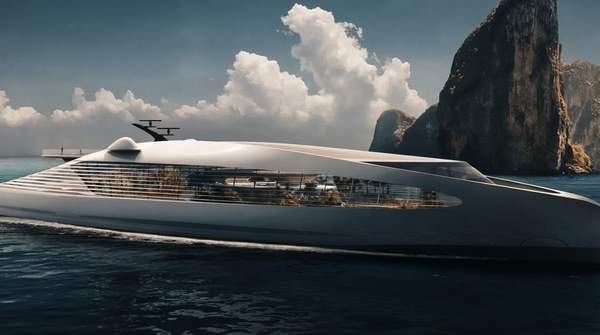
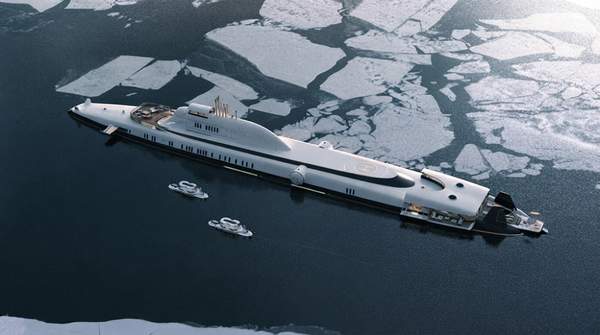
The submersible superyacht category is real and spectacular, but it is a different purchase entirely. MIGALOO Submarines, a design house for these vessels, describes "submersible superyachts" as offering "ultimate experiences, safety and privacy," developed through an owner-centered process that begins with a comprehensive briefing and a General Arrangement plan; its 165-meter M5 proposal is even offered as adaptable into a private submersible fortress. U-Boat Worx's two-seat Nemo shows the smaller end of the tender spectrum — an intimate underwater lounge for guest-friendly dives. If your ambition is a diving mothership like a MIGALOO concept or the Nautilus, an underwater "luxury yacht" with a retractable sundeck pool, a 50-square-meter lounge and master stateroom, you are commissioning a new superyacht, not equipping the one you own.
Recreational Submersibles: Exploring Shallow Wonders
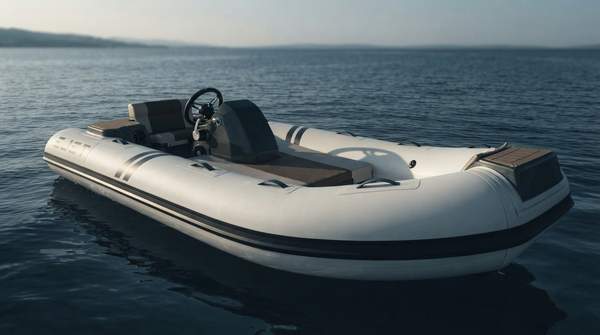
Most reef and wreck exploration happens well within 300 meters, which is precisely why so many luxury submersibles in the yacht segment target that band, according to TheArsenale's guide. There is genuine capability in that envelope. The U-Boat Worx Super Yacht Sub 3 reaches 300 meters — described by the manufacturer's product material as a compact engineering solution delivering genuine depth performance — while carrying one pilot and two passengers in deliberate luxury. U-Boat Worx says it "aspired to create the ultimate in luxury interior design": guests sit in a sumptuous chair in an air-conditioned environment with per-seat adjustable airflow, a hi-fidelity Bluetooth sound system, and a cold-storage box for chilled drinks. A Freeboard Extender and other engineering solutions round out the package.
On the Triton side, the reported specifications for the Triton 1650/3 LP give it a maximum operating depth of 500 meters — 1,650 feet, the source of its name — with the same one-pilot-plus-two-passenger occupancy, in a low-profile design intended for compact integration with superyachts. The same industry reporting also describes a two-person Triton with an "unlimited" depth classification; note that this is a specific designation in the reporting rather than a literal infinite capability, and few details about that model appear beyond it. If your diving ambitions are reefs, wrecks and clear lagoons, the recreational band gives you comfort and easy deck handling without paying the weight penalty of a deep-rated hull.
Expedition Submersibles: Venturing into the Deep
For owners with scientific or deeper ambitions, the envelope extends dramatically. U-Boat Worx's C-Researcher series is built for serious descent and extended observation, and the model range shows exactly what the commitment looks like. The C-Researcher 3 configured for 2,500 meters (8,200 feet) carries three occupants at a weight of 11,300 kilograms — 24,910 pounds — per the manufacturer's own series specifications. That is the trade-off made concrete: nearly three times the depth of the recreational band, purchased with roughly three times the mass of a compact three-person craft of around 3,800 kilograms described in the same industry comparison.
What buys you that depth is engineering. U-Boat Worx highlights two innovations on the C-Researcher craft: pressure-tolerant lithium-ion battery technology, developed in-house and tested to 4,000 meters, and an automatic trim weight system. The battery system delivers a claimed 350 percent increase in battery capacity compared with traditional lead-acid submersibles, storing 62 kWh in compact modules — power the manufacturer says enables stronger thrusters, additional lights, extended mission time, and travel time between surface and seafloor halved. Each submersible is delivered with a pilot training course, and passengers can even take the MANTA Controller to steer under supervision — a memorable touch on an expedition dive.
Comparative Overview of Leading Private Submersibles
To make the trade-offs visible, I have sorted the key models along two axes at once: operational capability (depth, occupancy) and intended mission (recreation versus expedition). Reading the table this way reveals the pattern that should drive your shortlist — depth ratings climb in step with weight, and occupancy choices constrain both.
| Model | Manufacturer | Use Case | Max Depth | Occupancy | Key Features |
|---|---|---|---|---|---|
| Super Yacht Sub 3 | U-Boat Worx | Recreation | 300 m | 1 pilot + 2 passengers | Air-conditioned luxury interior, Bluetooth sound, cold-storage box, Freeboard Extender; engineered for yacht integration |
| Triton 1650/3 LP | Triton | Recreation | 500 m (1,650 ft) | 1 pilot + 2 passengers | Low-profile design intended for compact superyacht integration |
| C-Researcher 3 (2,500 M) | U-Boat Worx | Expedition | 2,500 m (8,200 ft) | 3 occupants | Pressure-tolerant lithium-ion batteries (62 kWh, tested to 4,000 m), automatic trim weight system; 11,300 kg weight |
Use this table as a first filter, not a final answer. The comparison is drawn from publicly available manufacturer specifications and industry reports — not hands-on testing — and the depth-to-weight pattern it shows is inferred by setting the compact models against the heavier expedition craft. Two Triton-specific figures warrant particular care: the 1650/3 LP figures come from industry reporting rather than a detailed manufacturer sheet supplied here, and the "unlimited" classification attached to a two-person Triton is a designation in that reporting, not a measured limit.
Key Considerations for Yacht Owners
TheArsenale's guide recommends weighing four variables together before committing: maximum depth, number of seats, weight relative to your crane, and battery endurance. Each one influences where the submersible can be stored and how it is deployed. The logic is straightforward. A 3,800-kilogram three-person craft in the recreational band is within reach of many superyacht cranes and tender garages; an 11,300-kilogram expedition hull demands serious lifting equipment and a dedicated stowage plan. U-Boat Worx says it factors launch-and-recovery solutions into each model's design for safe deployment from any type of support vessel — but your yacht still has to provide the crane and the deck.
Depth deserves honest interrogation too. If your diving will be reefs, wrecks and shelf waters, paying in mass and complexity for 2,500 meters buys capability you may never use. If, however, you envision scientific partnerships or exploration of deep features, no shallow craft substitutes. Comfort, as TheArsenale observes, is what most owners ultimately cite as the deciding factor — and it is worth noting that the reputable manufacturers in this space, such as Triton and U-Boat Worx, are distinct from the OceanGate Titan, which this article does not cover.
Making Your Decision: Matching Submersible to Yacht and Ambition
The decision, stated simply: select a private submersible by carefully matching its depth capability, passenger capacity and physical dimensions to your yacht's operational constraints and your primary underwater exploration goals — recreational viewing versus deep-sea expedition. If your cruises favor shallow, luminous waters and convivial guest dives, the Super Yacht Sub 3 or the Triton 1650/3 LP sit in the sweet spot. If your ambitions run to the deep ocean, the C-Researcher 3 delivers it — at a weight your mothership must be built to carry.
The measurable indicator of a sound choice is concrete: the chosen submersible's specifications — weight, dimensions and depth rating — align with your yacht's crane capacity, storage space, and your intended use. Before you sign anything, confirm three numbers with your captain and naval architect: your crane's safe working load against the submersible's fully equipped weight, the tender garage's footprint against its dimensions, and the depth band of the dive sites you actually plan to visit against its rated maximum. When those three lines all check out, the specification sheet becomes a purchase order — and the ocean, an itinerary.
Sources
- Personal Submarine Buying Guide 2024 — YATCO Luxury Yachts for Sale, Superyacht Charter & Business Services
- Submarine for Superyacht: A Guide to Luxury Submersibles — TheArsenale
- Home — MIGALOO Submarines
- Home - Nautilus Submarine — Nautilus Submarine - Luxury Underwater Yacht
- Super Yacht Sub 3 - U-Boat Worx private submarines
- C-Researcher series — U-Boat Worx
- C-Researcher Series – Submersibles to 3,000 m — U-Boat Worx