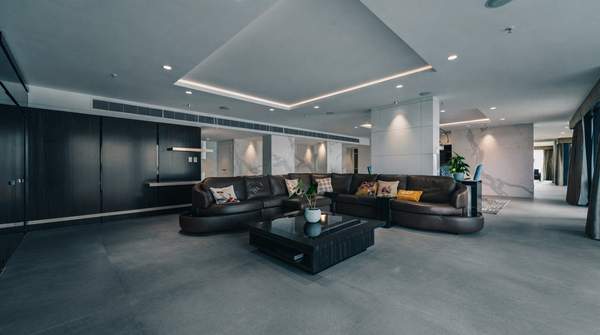
Inclusive design in a luxury home or hotel is not a compromise between elegance and accessibility; done well, it is a single discipline. The most useful framing comes from Steven May Jr. of May Residential, who defines the goal as environments usable by all people, to the greatest extent possible, without adaptation or specialized design — while maintaining the aesthetic standards luxury living demands. This article distills that philosophy into five principles, compares them across user benefit, aesthetic integration and implementation complexity, and shows how each one can raise rather than dilute a high-end result.
The Imperative of Inclusive Luxury Design
The starting point is a shift in scope. As May Residential puts it, inclusive design in luxury home building means integrating features that enhance accessibility while preserving the aesthetic appeal and high standards associated with luxury living — and it is not just about meeting the needs of people with disabilities. It is about ensuring that everyone, regardless of age or ability, can use and enjoy their home comfortably and safely.
The same principle applies to hospitality. Quinn Evans, writing on inclusive design, describes the architect's task as creating spaces that are not only functional but foster a sense of belonging and respect, so that everyone can navigate and enjoy them with ease and dignity. That framing matters for a luxury project because dignity is already the currency of high-end design; inclusive design simply extends it to every guest and resident, not just the able-bodied ones.
What follows are five principles synthesized from this guidance and from expert commentary on sensory design and technology in premium spaces. Each is evaluated on three dimensions: the core benefit to diverse users, the strategy for integrating it into a luxury aesthetic, and the relative complexity of implementation.
Comparative Framework: Inclusive Design Principles for Luxury Spaces
Use this table to prioritize. Read each row as a decision: what the principle delivers for your guests and residents, how it stays invisible or beautiful within the design language, and how demanding it is to execute.
| Principle | Core User Benefit | Aesthetic Integration Strategy | Implementation Complexity |
|---|---|---|---|
| Seamless Physical Access | Unhindered movement and use of spaces for people with diverse physical abilities, including those using mobility aids | Accessibility as an inherent part of the luxury aesthetic rather than an add-on | Low to moderate; resolved through layout and circulation choices |
| Multi-Sensory Comfort | A holistically comfortable environment addressing visual, auditory, tactile and even olfactory needs | Materials, lighting and acoustic treatments selected to enhance the luxury ambiance while providing sensory comfort | Moderate; benefits from sensory mapping early in the design process |
| Intuitive Simplicity ("Simplexity") | Effortless control and interaction with advanced technology, reducing cognitive load | Complex technology concealed behind minimalist interfaces for a clean, sophisticated look | Moderate to high; considerable technological complexity operates behind the scenes |
| Flexible & Adaptable Spaces | Spaces that respond to varied human needs rather than prescribing a single use pattern | Orchestrated sensory stimuli that influence how people feel, behave and remember a space | Moderate; depends on how thoughtfully stimuli are considered and arranged |
| Empathetic Design Process | Spaces that foster belonging and respect for everyone who inhabits or visits them | Understanding and integrating the needs of the communities who will use the space | Low; a process commitment rather than a capital expense |
The framework's practical value is in the trade-offs it exposes. Seamless physical access and an empathetic process cost little beyond intent and planning, while multi-sensory comfort and simplexity demand more deliberate coordination of materials, lighting and technology. None of the five requires abandoning a luxury vocabulary; each is a strategy for expressing it more completely.