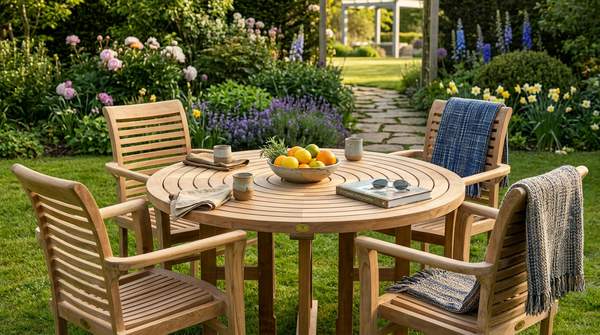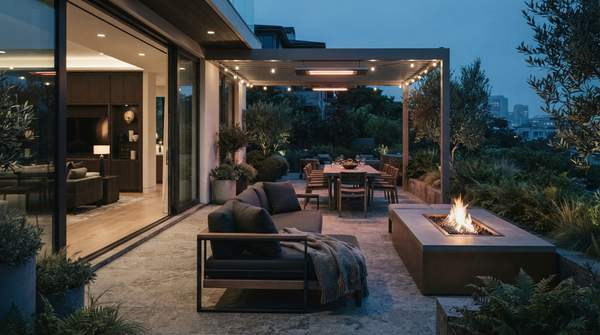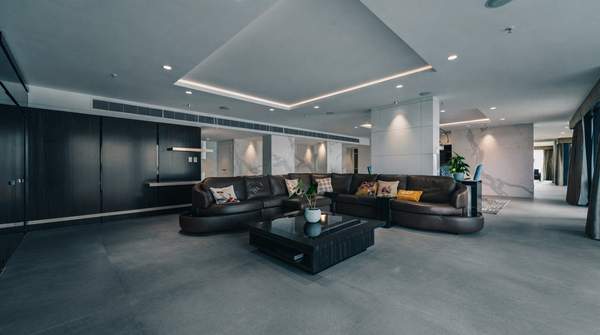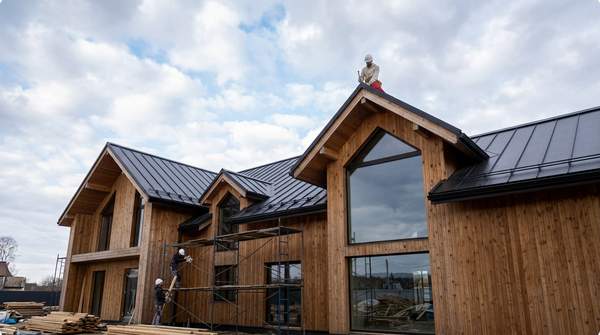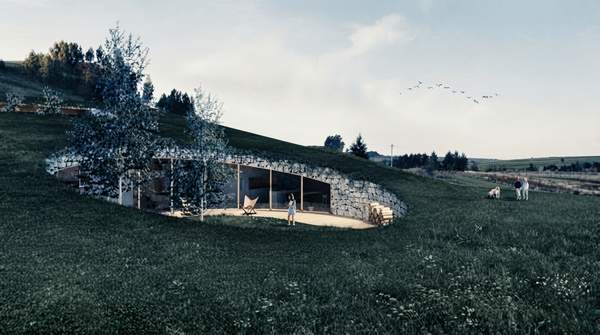
The most sought-after quality in contemporary luxury residential architecture may be one that money alone cannot buy: belonging. As architectural commentator Mahshid Motamed argues, in an era when almost any aesthetic can be reproduced anywhere, context has become one of architecture's rarest resources—a meaningful relationship between a building, its environment, and the lives unfolding around it. For homeowners and buyers, this translates into a practical skill: the ability to look at a property and judge whether it genuinely integrates with its site, materials, and climate, or whether it merely borrows a look.
What is Contextual Architecture in Luxury Design?
Contextual architecture is design that begins with the site rather than with an image. The architect Michael Olsen, AIA, describes it as working in harmony with a building's surrounding landscape so that the design preserves and enhances the very qualities that define a place. In luxury residential work, this means the site informs massing, orientation, and material selection from the first sketch—a principle the Sarasota firm Halflants + Pichette applies across its Gulf Coast modern projects.
Luxury, in this framing, is not the ability to separate oneself from the ordinary conditions of life, as Motamed puts it, but the ability to inhabit those conditions intelligently, comfortably, and meaningfully. A contextually designed home is judged not only by what it looks like but by what it makes possible for the people living in it.
The Problem with Placeless Luxury
The counterpoint is what might be called placeless architecture. Architectural styles have become highly transferable due to globalization. For instance, a luxury home in Dubai might adopt the aesthetic of a Mediterranean villa, or a hotel in Tehran or Shanghai could replicate the ambiance of a minimalist Kyoto retreat. The result is buildings that could exist anywhere—and therefore belong nowhere.
The consequences are not just aesthetic. Motamed notes that entire glazed façades, mechanically conditioned interiors, and uninterrupted views have become symbols of contemporary refinement, even in climates where these choices create substantial environmental demands. Buildings designed to exclude their surroundings often require increasingly complex systems to compensate: solar gain must be controlled, artificial cooling must counter overheating, and mechanical ventilation must replace natural air movement. Technical sophistication ends up managing problems the original design itself intensified.