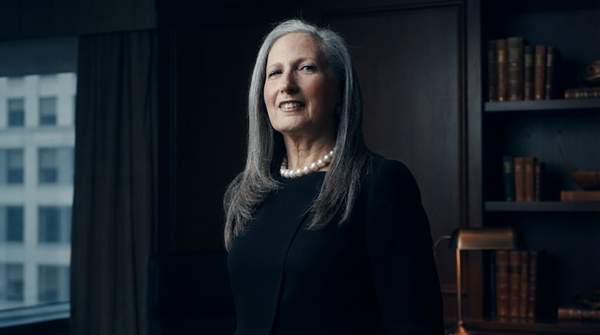
Josephine Linden's central message on intergenerational wealth is disarmingly simple: investment performance is necessary but nowhere near sufficient. Speaking to students in Yale School of Management's Master's in Asset Management program on November 13, the founder and CEO of Linden Global Strategies argued that managing wealth across generations requires two distinct but intertwined strategies — a financial strategy for the portfolio, and a family strategy for the legacy. Her framework, as reported by Yale School of Management, gives families a practical way to see which side of that ledger they have neglected.
Introduction: Beyond the Portfolio
Linden built her case from decades in private wealth management, and her title for the talk — "Beyond the Portfolio" — captures the argument precisely. Drawing on her experience advising clients, she emphasized that successful wealth management goes far beyond investment performance. Understanding family dynamics, individual priorities, and long-term goals is, in her telling, equally essential when helping clients make financial decisions that may shape future generations.
That reframing matters for affluent families because it relocates the hard work of wealth preservation. The technical task of constructing a portfolio can be delegated to professionals. The relational work — how a family talks, decides, and hands over responsibility — cannot. Linden's colloquium, as Yale's account makes clear, treated that human dimension not as a soft supplement but as a core discipline of the field.
Linden's Dual Framework for Intergenerational Wealth
The clearest way to apply Linden's perspective is to sort her reported principles into the two dimensions she herself distinguished: the financial strategy that manages assets, and the family strategy that preserves them across generations. The table below organizes what she discussed at Yale so a family can audit its own approach.
| Aspect of Wealth Management | Linden's Reported Principle | Key Elements |
|---|---|---|
| Financial Strategy (The Portfolio) | Sound investment judgment and portfolio construction are the foundation, but only part of the task. | Investment performance; portfolio construction; technical expertise |
| Family Strategy (The Legacy) | Understanding family dynamics, individual priorities, and long-term goals is equally essential to financial decisions. | Communication; succession planning; shared values; long-term relationships |
| Next-Generation Preparation | Younger family members need practical experience and a connection to the family's broader legacy. | Responsibility, ownership, and financial decision-making across generations |
| Philanthropy and Legacy | Charitable activities should be aligned with the family's values to shape a lasting legacy. | Values-aligned giving; Linden's own commitment to supporting women's education |
Readers can use this framework diagnostically: for each row, ask whether the family has a deliberate practice in place or is simply assuming the work is being done. The distinction the table draws — between the technical management of assets and the relational work of preserving values — is the evidence-derived core of Linden's philosophy.