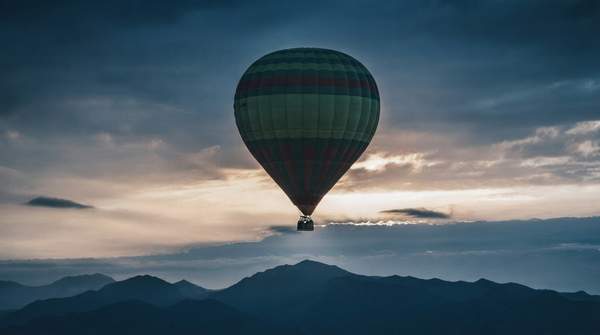
Luxury slow travel is the practice of spending more time in fewer places, and it is quietly rewriting what a high-end trip means. The suite, the sommelier's table and the private guide can still be part of it, but they now serve immersion rather than speed. As the travel writer Arbaz Paracha puts it, a conventional itinerary can leave you with "a blur of transfers, check-ins, and names you barely remember" — a trip that looks exceptional on paper and feels oddly thin in memory. Slow travel replaces accumulation with depth. In the luxury context, that shift turns the question from how many places fit into a week to which place deserves your full attention.
Understanding Luxury Slow Travel: A New Definition of Opulence
Slow tourism emerged over recent decades as a response to mass tourism's excesses — the quantity-over-quality model that, as the European policy platform Interreg Europe frames it, has contributed to environmental degradation, cultural erosion and unsustainable practice. Its roots lie in the broader slow movement, and most pointedly in Slow Food, which began in Italy in 1986 as a backlash against fast food culture, sparked by the arrival of a McDonald's franchise near Rome's Spanish Steps. Responsible Travel's guide to the philosophy traces this lineage directly.
Casa di Langa's Ciro Lieto describes the resulting manifesto as an invitation to "live each stage of your journey with intensity and sensitivity" — calmer pacing, active participation in local traditions, and preference for local lodgings, artisans and producers. What changes in the luxury segment is not the philosophy but the unit of value. When opulence is measured by connection rather than consumption, the most exclusive thing a trip can offer is not access, but understanding. I find this is the crucial mindset shift: the hotel becomes a base for knowing a territory, not a bubble insulating you from it.
Northern Spain Travel's guide frames this precisely. It values "private access, expert curation, and comfort, but uses them in service of immersion rather than speed." That distinction — the same luxury toolkit, redirected — is what separates a slow luxury trip from an ordinary indulgent one.
Core Principles of Luxury Slow Travel
Four principles recur across the definitions, and each translates into a planning decision.
Depth over breadth. AFAR's Ellen Carpenter calls slow travel "a sensibility" rather than a trend, advising travelers to stay longer in one place and leave breathing room in the itinerary. It is a mindset before it is a schedule.
Pace and deceleration. The journey itself is part of the experience. Atelier Le Monde, writing on the renewed romance of luxury trains, notes that Condé Nast Traveler has observed train journeys bringing travelers "to less-trodden places, often in grand style" as demand for slow travel grows. Deceleration is not inaction; it is attention.
Connection to local communities. Responsible Travel argues that meaningful connection fails when we are "just passing through, ticking landmarks and experiences off our personal bucket lists." The luxury version of this principle is proximity with intent: artisans, workshops, kitchens, markets.
Sustainability and responsibility. Slow travelers direct spending toward local accommodations, artisans and producers, supporting what Casa di Langa calls balanced and sustainable economic growth. A high budget amplifies this effect, since every euro or dollar spent locally carries further.
Luxury Slow Travel Decision Framework
Use this matrix to test each major planning choice against the principles above. The conventional column describes what high spending buys by default; the slow column describes where redirecting it gets you.
| Planning Stage | Conventional Luxury Travel | Luxury Slow Travel | Core Principle Emphasized |
|---|---|---|---|
| Itinerary structure | Many destinations packed into a tight schedule; the trip becomes a sequence of check-ins and transfers | Anchored, not scattered: one region, perhaps two bases, with enough continuity that mornings don't vanish into repacking | Pace and depth |
| Transportation | Fastest available routing; airport and transfer logistics treated as friction to be minimized | Journey-as-destination: rail journeys that savor the landscape, or small-ship cruising that entrusts the schedule to weather and tide | Deceleration |
| Accommodation | Standardized international-chain luxury, comfortable but set apart from local daily life | A stable, locally integrated base — a farmhouse, inn or relais de charme, or a boutique property — used as a base for knowing the territory | Local connection |
| Activities | Curated, exclusive experiences that can remain isolated from local life | Workshops, artisan visits, culinary traditions and unhurried encounters that reveal place rather than showcase it | Immersion |
One benchmark helps calibrate the pace row: Northern Spain Travel cites guidance suggesting a minimum dwell time of seven to fourteen days per destination to move from surface tourism toward genuine immersion. That does not mean every trip must be two weeks in one village — it means the structure should be anchored rather than scattered.
On transport, note that slow travel does not condemn every flight or private transfer. The point is choosing when the journey itself deserves to be the experience. As Paracha writes, "You don't need less planning. You need better planning, with enough restraint to let the destination breathe."
Curated Luxury Slow Travel Experiences
Four formats translate these principles into bookable categories of trip — types, not endorsements of any operator.
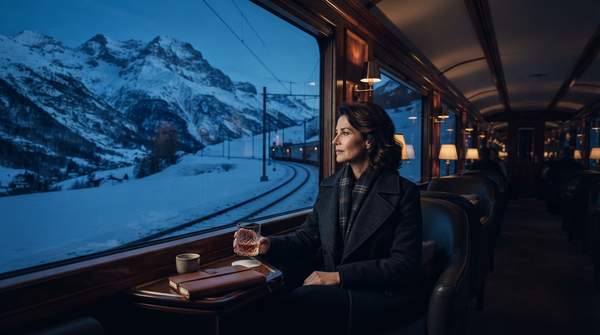
- Rail journeys in grand style. From the British Pullman to long-distance routes reaching less-trodden regions, luxury trains make the passage itself the centerpiece — Champagne in a wood-paneled saloon while the landscape unrolls.
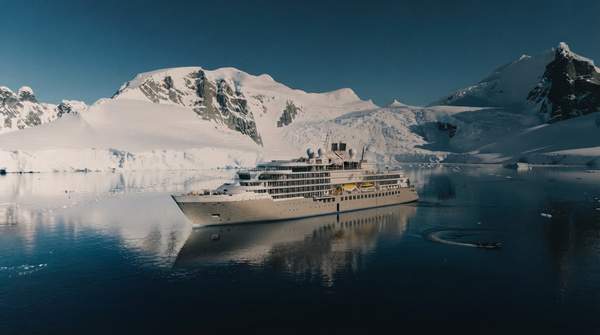
- Small-ship cruising. Responsible Travel describes languid voyages along Croatia's Dalmatian coast that slip into deserted bays and reach Dubrovnik after the cruise crowds have gone — a pace set by tide and weather rather than a fixed timetable.
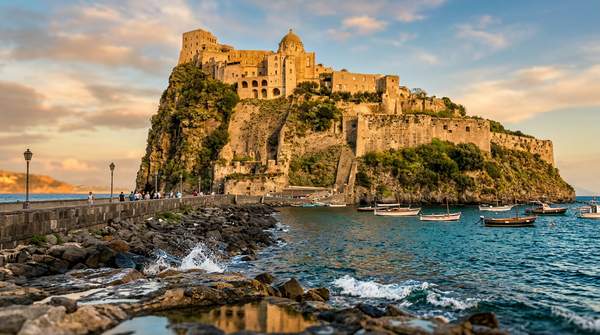
- Single-base regional immersion. A villa, farmhouse or relais de charme held for a week or more, from which a region opens gradually. Outlook Luxe's account of Bihar — a journey through Patna, Munger and Gaya — shows the shape: grand hotels as comfortable anchors, unhurried travel between sacred ghats, and time in Madhubani painting and Tikuli art workshops meeting the artisans themselves.
- Themed deep dives. Culinary, artistic or wellness-focused trips that organize a single region around one pursuit, in the spirit of AFAR's journeys grouped by food, arts, nature and wellbeing.
Notice what these share: each spends its luxury on time and access rather than on speed. The Bihar example is telling precisely because its appeal, in Outlook Luxe's framing, lies in rivers, architecture and traditions remaining intertwined — luxury shaped by "a sense of place rather than extravagance alone."
Embracing the Journey: Your Next Luxury Slow Travel Decision
To plan a luxury slow travel itinerary, prioritize depth over breadth, choose transportation that enhances the journey itself, select accommodations that foster local connection, and fill the days with activities that offer genuine cultural immersion. Treat this as a deliberate redirection of an existing budget, not an additional one. The measurable indicator of success is a shift in your planning from maximizing destinations to maximizing immersive experiences within a chosen region: fewer check-ins, one or two bases, and memories attached to names and places rather than to logistics. Before booking anything, ask the framework's question — which place deserves my full attention — and let the answer determine the shape of the trip.
Sources
- SLOWDOWN | Defining slow tourism — Interregeurope
- Slow travel guide — Responsible Travel
- Slow Tourism: Benefits and Origins of the Slow Travel Manifesto — Casa di Langa
- What Is Slow Travel: A Guide to Immersive Journeys - Northern Spain Travel — Northern Spain Travel -
- The Busy Person's Guide to Slow Travel: 20 Thoughtful Trips for Every Type of Traveler — AFAR Media
- The Art of Slow Travel — Atelierlemonde
- Chhath In Bihar: A Journey Through Sacred Ghats, Heritage And Slow Travel - Outlook Luxe