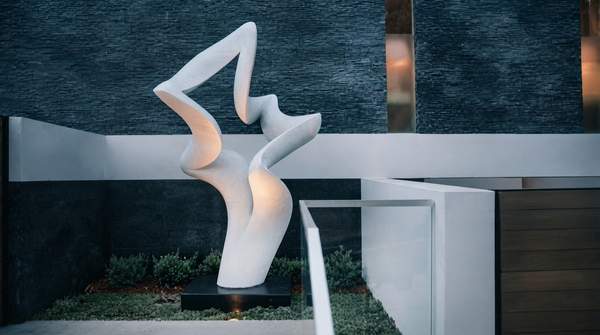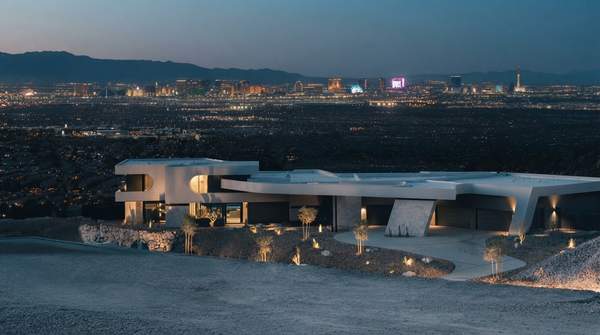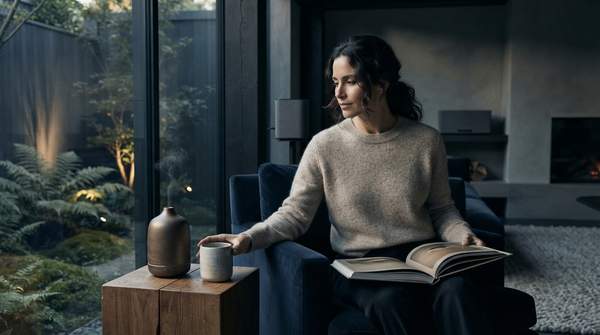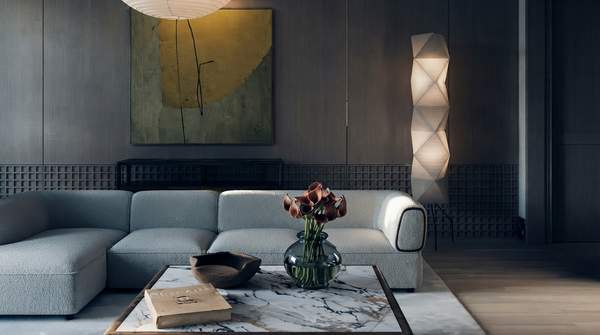
The most sought-after luxury residences today are defined less by what they contain than by what they hold back. Minimalist design—open space, natural light, restrained palettes, and a small number of exceptionally well-made objects—reduces the visual noise that drives mental fatigue, and for affluent homeowners, it has become a way of converting living space into a sanctuary for clarity and calm.
The Quiet Power of Less: Minimalism in Luxury Living
Minimalist architecture draws on Japanese design traditions and the twentieth-century modernist movement, favoring open spaces, neutral color palettes, natural light, and a focus on quality over quantity, as the architecture firm Russell and Dawson describes it. Architects such as Tadao Ando and Kazuyo Sejima have shown how this approach can produce buildings that are both functional and emotionally calming.
What has changed is the audience. Writing for Plastic Free Pursuit, Vaishnavi Tonpe observes that consumers now gravitate toward timeless silhouettes, immaculate craftsmanship, and understated sophistication rather than loud labels and ostentatious designs. In a values-driven marketplace, many luxury brands have responded by creating timeless rather than seasonal collections and reducing design complexity so that quality itself becomes the spectacle.
The appeal is not ascetic. It is restorative. In an overstimulating world of notifications, clutter, and constant decision-making, minimalist interiors offer a form of relief—one where "luxury no longer needs to announce itself," as Tonpe puts it, and presence is felt in the calm elegance of simplicity.
Beyond Decluttering: The Psychology of a Minimalist Sanctuary
The psychological case begins with clutter. Writing in ArchDaily, Camilla Ghisleni notes that "clutter-free environments help lower cognitive overload and enhance mental clarity," and that excessive visual stimuli can contribute to stress, whereas simplicity fosters a sense of calm and order. Fewer distractions also mean better concentration and efficiency, which is why minimalist spaces are often recommended for work and study areas.
Grand Rising Behavioral Health, a behavioral health practice, frames the mechanism in physiological terms: simplifying one's surroundings is associated with lower cortisol levels, reducing anxiety and supporting better mood. The same source links reduced possessions to less anxiety around maintenance and organization, and to greater life satisfaction among people who adopt the lifestyle.
Counseling writer Anthony Ernst adds the emotional dimension: emotional clutter can become just as exhausting as physical clutter, making it difficult to feel at ease in one's own space. When surroundings are calm and orderly, he argues, it becomes easier to relax, focus, and reach a peaceful state of mind. In short, the brain responds to environmental order—not as an aesthetic preference, but as a load-bearing condition for well-being.
The Affluent Shift: From Conspicuous Consumption to Conscious Curation
For wealthy households, minimalism is not about giving things up. It is about refinement. Affluent consumers increasingly prioritize travel, wellness retreats, fine dining, creative activities, and personal development—experiences that, as Tonpe reports, bring fulfillment material objects cannot match. That preference naturally extends into the home.
The result is a shift from accumulation to intentional curation. The wealthy want spaces that feel like sanctuaries, filled only with items that offer joy, beauty, or utility. Decluttering, in this context, becomes an aspirational lifestyle statement rather than a sacrifice, and it influences broader cultural trends toward what has come to be called quiet luxury.
This reframing matters for design decisions. Where conspicuous consumption once rewarded visible quantity—more furniture, more ornament, more square footage filled—quiet luxury rewards discernment: fewer, better items whose craftsmanship is legible precisely because nothing competes for attention. Emotional luxury becomes as important as material luxury, with people reporting that they feel calmer, happier, and more grounded in minimalist environments.
Minimalist Luxury Design: A Well-being Framework
The framework below maps each core design element to its intended psychological outcome and to a principle for applying it in a luxury residence. Use it as a decision matrix: identify the mental state you want a room to support, then trace backward to the design choices that encourage it.
| Design Element | Psychological Benefit | Luxury Application Principle |
|---|---|---|
| Decluttering and simplicity | Reduces stress and anxiety by eliminating visual distractions and lowering cognitive load | Curate ruthlessly: retain only pieces offering joy, beauty, or utility, and let negative space carry the composition |
| Natural light | Boosts mood, improves concentration, and supports overall mental health | Prioritize daylighting strategies—orientation, glazing, and unobstructed windows—over artificial embellishment |
| Quality materials, such as wood and stone | Creates a warm, inviting, grounded atmosphere that enhances emotional well-being | Invest in a small number of exceptional natural materials whose texture and finish reward close attention |
| Neutral, restrained palettes | Minimizes sensory competition, reinforcing a sense of order and calm | Choose timeless tones over seasonal color statements, letting light and material provide variation |
| Open space and layout | Supports focus and efficiency with fewer environmental distractions | Design rooms around clarity of purpose rather than display, especially in work and study areas |
The reasoning path is consistent across rows: each element removes a form of environmental demand—visual stimuli, sensory competition, maintenance burden—and each luxury application replaces quantity with quality. Research on daylighting in workplace settings, published in the Marine Society & Royal Navy Educational Science Journal, reinforces one column of the matrix: employees with significant natural light exposure report higher satisfaction, reduced stress, and increased productivity, and design standards such as WELL treat natural light as a component of psychological well-being. The same logic transfers to residential rooms where calm and focus are the goal.
Crafting Your Calm: Applying Minimalist Principles
Applying the framework starts with diagnosis rather than shopping. Walk through each room and ask what it demands of your attention: surfaces that must be organized daily, decor that competes with itself, light that arrives blocked or uneven. Every element you remove is cognitive load you no longer carry.
Then curate upward. Where something must remain, let it be the best version of itself—one exquisitely finished wood surface, one piece of stone that anchors a room, one seating arrangement arranged for conversation rather than display. Emilceramica's design magazine makes the underlying point plainly: mindfully arranged spaces, through considered color, materials, and layout, can turn the home into a refuge of peace and serenity.
Two boundaries are worth stating. These principles describe interior design choices only—architectural plans and specific products are outside this scope. And they complement, but do not replace, professional guidance: significant renovations benefit from an interior designer or architect, and persistent stress or anxiety deserves a mental health professional rather than a room refresh.
Cultivating Calm: Your Next Steps in Luxury Minimalist Design
The decision, then, is straightforward: prioritize intentional design choices that reduce visual clutter, maximize natural light, and incorporate high-quality natural materials to foster a sense of calm and focus in your luxury residence.
How will you know it is working? The measure is a noticeable reduction in feelings of stress or distraction within your living space, accompanied by an increased sense of peace and mental clarity. That shift is subjective, but it is observable: rooms feel easier to occupy, attention settles faster, and the home begins to function as evidence suggests it can—as a sanctuary where quiet luxury and a quieter mind reinforce each other.
Sources
- The Mental Health Benefits of Minimalism — Grandrisingbehavioralhealth
- Why Minimalism Is Becoming the Future of Luxury — Plastic Free Pursuit
- The Psychology Behind Minimalist Architecture — Russell and Dawson Inc.
- Less or More? The Psychological Influence of Minimalist and Maximalist Spaces — ArchDaily
- Minimalism And Its Deeper Psychological Impact — Beyond Healing Counseling
- How does interior design help mental health? How to transform your space and mind — Emilceramica