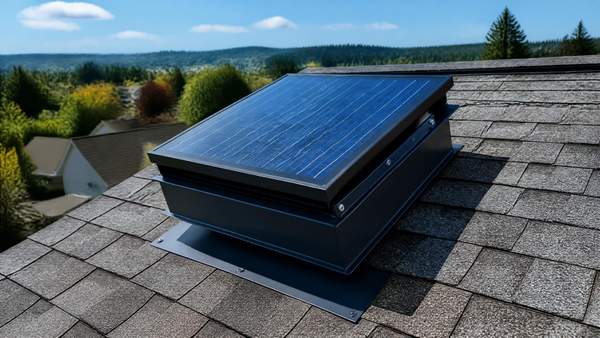
Most homeowners think about insulation and windows when they picture energy efficiency, but the attic quietly does a lot of the work too. When hot, humid air gets trapped up there, your cooling system has to work harder, and over time that trapped air can wear down your roofing and structural materials.
Solar ventilation solves this by putting the sun's own energy to work. EcoVantage Energy carries a lineup of solar-powered ventilation products built for different attic layouts, airflow needs, and installation setups, ranging from automated attic fans to gable and garage systems. Here's what the problem looks like, how solar fans solve it, and which of EcoVantage's six models might fit your home.
Why Attics Struggle With Heat and Moisture
In summer, an enclosed attic absorbs intense solar radiation, and temperatures inside can climb past 150 degrees Fahrenheit. That heat doesn't stay put. It radiates down into your living space, forcing your air conditioner to run harder and longer, which shows up directly on your electric bill.
Winter brings a different problem. Cooking, showering, laundry, and other everyday activities send humidity rising up into the attic, and with nowhere to go, that moisture condenses on cold surfaces. Over time, this creates ideal conditions for mold growth, wood rot, and shingles that wear out well before their time.
Passive vents alone rarely move enough air to prevent either issue. Electric fans move more air, but every hour they run adds to your utility bill. Solar fans avoid that tradeoff entirely: they run on sunlight instead of grid power, and because they draw more energy as the sun gets stronger, they naturally work hardest exactly when your attic needs them most, without costing you anything extra to operate.
About EcoVantage Energy
EcoVantage Energy has been building sustainable home technology since 2001, operating out of Weatherford, Texas. The company's focus is on durable, energy-efficient upgrades that cut household costs without cutting corners, and its catalog extends well beyond ventilation to include residential solar arrays, battery backup systems, and outdoor lighting.