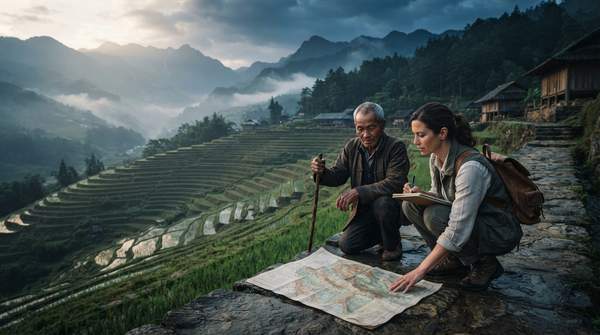
When I first traced how a rice terrace, a vineyard valley, or a historic cityscape earns its place on the UNESCO World Heritage List, one thing became clear almost immediately: inscription is not a prize. It is the midpoint of a lifecycle. A site must first prove it holds Outstanding Universal Value, pass through a formal nomination sequence that begins years earlier on a national Tentative List, and then commit to a structured, adaptive management process that never really ends. For cultural landscapes in particular, UNESCO's own handbook treats the nomination documentation as the foundation for everything that follows, meaning the work of preservation begins the moment the paperwork does.
The Foundation: Outstanding Universal Value
Every World Heritage site rests on a single qualifying idea. As defined by the Operational Guidelines for the Implementation of the World Heritage Convention, Outstanding Universal Value means a site carries cultural and/or natural significance so exceptional that it transcends national boundaries and matters to present and future generations of all humanity. The U.S. National Park Service, in its guide to the American arm of the program, puts it plainly: this value is the bar a property must clear before anything else happens.
What makes cultural landscapes distinctive is that their value lies in relationship rather than in objects alone. UNESCO's selection criteria note that since 1992, significant interactions between people and the natural environment have been recognized as cultural landscapes, a category evaluated under the cultural criteria (i) through (vi). These criteria assess qualities such as human creative genius, living cultural traditions, and significant stages in human history. The Operational Guidelines also record that this recognition was refined through a series of regional and thematic expert meetings held in 1994 and 1995, addressing subjects from heritage canals in Canada to Asian rice culture and terraced landscapes in the Philippines, and to identifying associative cultural landscapes in Australia. A landscape, in other words, is inscribed because of what people and place have made of each other.
One further consideration shapes every candidacy: the protection, management, authenticity and integrity of a property are also weighed alongside its cultural significance. Value alone does not suffice; the site must arrive with credible care already in place.