Private art foundations have emerged as pivotal institutions in shaping contemporary art discourse, offering distinct operational and curatorial models for public engagement and the preservation of cultural legacy. These entities empower philanthropists and collectors to transcend the traditional gatekeeping of public museums, allowing them to exert significant control over the narrative surrounding their collections and actively influence art history. By examining the Dia Art Foundation, the Judd Foundation, and the Pinault Collection, one can discern varied, yet equally impactful, approaches to establishing a lasting presence within the art world.
The proliferation of these private institutions signifies a profound cultural shift where art is no longer merely safeguarded but is actively framed within coherent, often personally curated, narratives. As Katy Donoghue observed in Whitewall, collectors, through their foundations, effectively position themselves as cultural architects, ensuring their holdings remain central to ongoing artistic conversations. This autonomy allows them to respond with agility to contemporary themes, whether concerning identity, ecology, or geopolitics, thereby shaping art history in real-time.
Dia Art Foundation: Preserving Artist Vision
The Dia Art Foundation, established in New York in 1974 by Philippa de Menil, Heiner Friedrich, and Helen Winkler, is fundamentally committed to advancing, realizing, and preserving artists' visions. Its mission is fulfilled through the commissioning of single-artist projects, the organization of focused exhibitions, and the realization of site-specific installations, alongside the in-depth collection of works by a select group of artists from the 1960s and 1970s, according to the Dia Art Foundation. The name "Dia," derived from the Greek word meaning "through," aptly reflects the institution's role in enabling ambitious artistic endeavors that might otherwise be unattainable due to their inherent scale or scope.
Dia's collection notably includes works by seminal Minimalist artists such as Donald Judd and Dan Flavin. The foundation maintains a significant public presence through its nine permanent sites across the United States and Germany, complemented by three changing exhibition spaces in New York State: Dia Chelsea, Dia Beacon, and Dia Bridgehampton. Its unwavering commitment to site-specific projects is exemplified by its stewardship of Walter De Maria's The Lightning Field (1977) in New Mexico and Nancy Holt’s Sun Tunnels (1973-76) in Utah, which Dia acquired in 2018. This dedication continued with the addition of Cameron Rowland’s Depreciation, 2018, as a new Dia site in 2023, underscoring its consistent approach to artistic preservation since its inception.
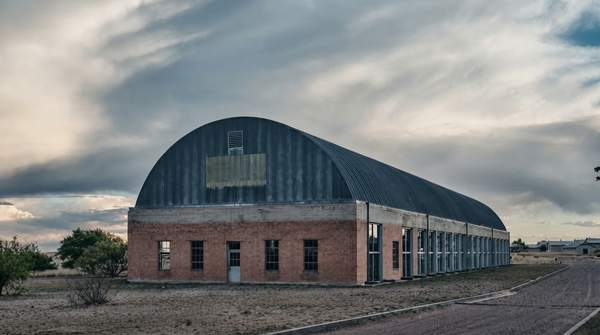
Dia Beacon, opened in 2003 in a former Nabisco box printing factory, serves as a primary venue for presenting Dia’s collection of art from the 1960s to the present, alongside special exhibitions and public programs. This focused curatorial strategy, emphasizing a specific historical period and a deep engagement with individual artists' oeuvres, has profoundly influenced the discourse around Minimalist and Post-Minimalist art, establishing Dia as a crucial arbiter of these movements' legacies.